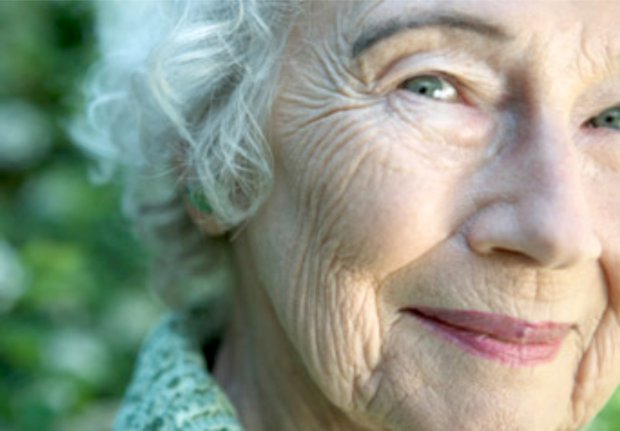
"I am old now: gray, wrinkled, tired, and bloated, and my joints
ache, too. But I am ready to come into my full destiny—as my childhood dreams
predicted—as a Neo-Amazonian Pirate Queen
of my own vessel: firing cannonballs at the worldwide culture of patriarchy in
the name of all that does not suck." - Roseanne Barr

Turning 60:
Because I
had written a book on turning 50, I was curious about what turning 60 would
bring up for me. Mostly, I could feel my energy slowing down, but ironically, I
felt younger. I was finally doing work (in my 50’s) that I loved, sharing my
creativity, knowledge and self-care practices with mid-life women in
transition, but most importantly I felt valued and appreciated more than I ever
did as a stay-at-home mom. (I know, work to do there!) However, it’s been two
years now, and I’m just beginning to guess at what becoming an Elder is really
about, and I certainly don’t want to be called Crone yet.
But just as
I wrote a poem to reclaim and recycle that ugly word 'cunt', to re-empower myself after
feeling dishonoured, shamed and diminished by that word, lately I needed to reclaim
the Crone word.
Fortunately,
I have many books on my bookshelves that address this issue of aging, this fear
of growing older and the dread that some women feel at seeing wrinkles, gray
hair and saggy body parts appear. It’s not just about the cult of youth and
beauty in our culture; apparently it’s also a fear ingrained in our DNA after
500 years of witch hunts and a deadly inquisition. The following is a brief summary of the gist
of some of these books any take on accepting the "crone" word.
“Our cultures official rejection of the Crone
figure was related to rejection of women, particularly elder women. The
gray-haired high priestesses, once respected tribal matriarchs of pre-Christian
Europe, were transformed by the newly dominant patriarchy into minions of the
devil. Through the Middle Ages this trend gathered momentum, finally developing
a frenzy that legally murdered millions of elder women from the twelfth to
nineteenth centuries....As a rule, the real offenses of such women were (1)
living, or trying to live, independent of male control; and (2) being poor. Barbara G Walker, The Crone, Woman of Age, Wisdom and Power
Today we
just make old women invisible, socially and professionally handicapped by wrinkles
and gray hair in a way that men are not. As Walker notes, the “‘beauty’
industry exploits women’s well-founded fear of looking old (& not fit to be
seen in public).” But as we know, elder women used
to be oracles, read omens, were attached to temples of the Goddess as spiritual wise women and healers, were
doctors and midwives, health care advisers, scribes, ceremonial leaders,
religious and secular teachers, educators of the young. They were honoured and
valued members of society in many cultures.
This book The Crone is
a compendium of the history of how old women (crones) became witches in the
Middle Ages (burned, drowned, killed during the Inquisition) as well as some
mythology of the Dark Goddess under her various names. It explains how women
lost their spiritual and healing role when the pagan earth-based religions were
outlawed. Walker’s book is a good primer.
“To envision
a deity in the true female tradition, it is necessary to purge the image of
simplistic or unrealistic male interpretations” ...for example “sex goddess”,
“virgin Mother” “witch” or crone.” (p 174)

Another excellent
resource on aging is the book by Jean
Shinoda Bolen, Goddesses in Older Women,
Archetypes in Women over Fifty, Becoming a juicy Crone. I love the term
‘juicy crone’ better than just plain old crone. Our creativity after menopause goes into
creating things other than babies, and that’s where the “juice” comes in,
creative flow. It’s important to look at what we gain as we age, not only what
we lose. We’ve gained important life lessons, from facing challenges and
obstacles, and amazing life-changing inner journeys from which we return with
gifts of wisdom. Reading the chapter on Hecate helped me come to terms with my
fear of Hecate, the ‘witch’ or crone archetype, and reminded me of the value of
the descent at mid-life.
“If you return from your own descents into the underworld,
you have learned that love and suffering are part of life. By making it through
the hard times, you grow in depth and wisdom. A wise Hecate then becomes an
inner companion. Women friends or women in support groups gain this perspective
by listening and witnessing and caring about each other as well.”
“Hecate is
the goddess of Intuitive and Psychic Wisdom, often pictured at the fork in the
road, at transition times. Hecate is at the crux of the situation when a woman
enters the third phase of her life and heeds a pull inward. She appears
indecisive or as if her energy is lying fallow, when she is in this luminal phase.
If she stays at the crossroad until she intuitively knows what direction to
take, she emerges renewed and replenished.”

Another
favorite part of Bolen’s book is the section on Lionhearted Women where she includes a look at some goddess archetypes that are not in the
Greek & Roman pantheon, except for warrior goddess Athena, (who is however,
more cerebral strategist than warrior).
Some of the
primal animal images may seem overly scary to us, but she explains it as a
necessary fierceness that stands up for and cares for the underdogs and
underprivileged: “the archetypal energies of Kali/Sekhmet are expressed as ‘the
fierce compassion of the feminine’ that China Galland found in women who are
addressing major evils in our contemporary world. They have qualities that I
think of as being ‘lionhearted.’ The fury of a lioness is that of a protective
mother or a bereaved mother whose response is retaliatory. Kali rides out on a
lion to defeat the demons, while Sekhmet is both a lioness and a woman. Theirs
is a heart-motivated fury at evil that threatens to overwhelm and destroy what
they hold sacred. To be a woman who is outraged and protests against powerful
authority takes courage – a word derived from Coeur or ‘heart’.
....Unless a
woman has become callous or has armored herself against having feelings and can
live in her head, it is uncomfortably easy to mentally and viscerally imagine
how it feels at a body and soul level to be so treated (victims of incest,
neglect, abuse). And be helpless and totally
vulnerable....Without the archetype of Sekhmet/Kali, however, brutality and
vulnerability result in becoming numb, passive and docile. To be moved to
overcome such evils, women need to be lionhearted in having empathy and
courage, fury and restraint. While a dark goddess might do this alone, women
need the support of each other; like the mothers and the Grandmothers of the
Disappeared, there is some protection in numbers....The ‘enough is enough’
goddesses may bear unfamiliar names and inhuman faces, but their energy and
outrage are no longer foreign to us.”
We
are all Warrior Goddesses at heart. Chameli Ardagh has a TED talk online about
the Fierce face of the feminine – and she suggests that when Shiva is with Kali, his
calm presence and centered being makes her fierceness into medicine, and is not
destructive. https://www.youtube.com/watch?v=dcDCXzX_HQA
Looking at
goddess mythology is helpful in identifying archetypes that may exist in our
own psyches. We can empower ourselves with these images of wise, powerful, and
fierce feminine deities who are more than copies of male heroes, who embody the
whole of the female experience in their cycles and energy.
But what to make
of the ugly old crones and witches? They represent the third phase of Maiden
Mother Crone – the sacred mysteries represented by the Moon Goddesses of ancient ritual. Looking up the Crone in the Baba Yaga myth, I came across an article that
seemed to be asking the same question.
“When a
culture's language has no word to connote ‘wise elder woman,’ what happens to
the women who carry the "Grandmother" consciousness for the
collective? Prejudicial (prejudged) attacks throughout history against
older women symbolized patriarchy's feminization of fear: the ultimate fear of
annihilation, to be nonexistent (no existence). Centuries-long indoctrination
limits our imagination so that we see this ancient aspect of the feminine only
in her negative forms. We see her as the one who brings death to our old
way of being, to our lives as we have known them, and to our embodied selves. Our
fear of the unconscious makes the Crone or Baba yaga into an image of evil.” http://www.mythinglinks.org/BabaYaga.html
I think our
fear of the Old Woman, the Crone, is in part related to our fear of trusting
our own intuition, our inner knowing. We have been trained to control our
feelings, contain them by using the rational mind. But in so doing, we have
devalued this important embodied wisdom which comes from women’s rootedness in
the body, our knowledge of cycles, and the rules of nature. Most of us have no training
or education in this - the old rituals are rusty from neglect, the rites of
passage have been waylaid, the feminine principal itself persecuted and driven
underground by fear and loathing of 500 years of inquisition.
In the olden
times, the oracles and seers interpreted dreams for kings, priests and leaders,
the herbalists gave out remedies for healing, and illness was seen as “an
invitation from body wisdom to reconsider lifestyle choices, and help us become
more conscious and aware,” says Paula Reeves, in her book Women’s
Intuition. We must learn to become seers again, to understand the language
of intuition, the signals from the body which come to us in metaphor, as in
dreams. Using all the resources of the internet available to us today, can also
help us learn to decipher the metaphoric language in symbolic code. Tuning into
our bodies, we can listen to our symptoms and learn to hear their healing
messages. Many books, beginning with Louise Hays, have been published to give
us a lexicon to begin the work. The author of Women’s Intuition
proposes spontaneous contemplative movement as a technique for listening and
awakening the knowledge stored in the body.
“The subtle
healing intentions of your bodymind’s metaphor language will be
overridden-ruled out as irrational-unless you intentionally turn your conscious
attention to the nonverbal realm of the metaphor-to the images and spontaneous
movements that are your body’s way of signaling you.”
Can we learn to believe and understand that, “Beneath every mood, each symptom, dream image
or feeling, lies some unclaimed remnant of the true self, the original and as
yet undiscovered, soul-filled Self.”
As for me, I
want to lose my fear of the unknown, and reclaim the power of intuitive knowing,
as well as revalue the sacredness of my own body’s wisdom as I am getting older.
The more I practice knowing, and following up my intuition and my fierce
compassionate love, the more solid it grows. The less fear I have of the
future. Ageless goddesses, (not witches) that’s what we are, and once we tune
into our own empowerment, we withdraw the plug from fear of the Ugly Old Hag or
Witch. Dance with life, dance with beauty. Do you want to be a juicy Crone? I
want to keep on living my authentic truth until the end. Happy, healthy, dead,
as Christiane Northrup says in her book Goddesses Never Age.
Who’s afraid
of the big bad witch? Not me.